Toolkit guide
Topic
ECD
Tools & Frameworks
Best practices
Language
EN
Relevant actions
Action 1
Use it to…
This promising practice example can inform the design and development of early childhood intervention services.
Where to look in this resource
-The background highlights the context of the Solid Start programme. The results identify key positive experiences and barriers encountered. -The discussion explores key lessons from the implementation of Solid Start which can inform ongoing work and policy development
Image
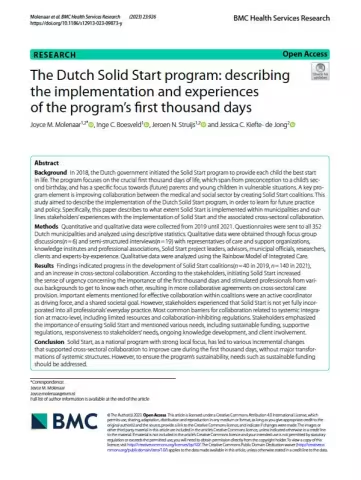
The Dutch Solid Start program: describing the implementation and experiences of the program’s first thousand days
Area
2.3
Description

The paper examines how the Netherlands implemented its national Solid Start programme, which aims to improve outcomes during the first 1,000 days of life, particularly for families experiencing vulnerability. A key aim was to improve collaboration between the medical and social sectors via Solid Start coalitions.

Brief description
This paper highlights key enablers and challenges for professionals involved in the Dutch Solid Start programme
Keywords
first 1000 days; integrated services; coalition building; vulnerable families; implementation lessons
Resource Title
The Dutch Solid Start program: describing the implementation and experiences of the program’s first thousand days
Topic
ECD
Tools & Frameworks
Tools & Frameworks
Language
EN
Relevant actions
Action 1
Use it to…
Policymakers can use data on child health and wellbeing trends to demonstrate the importance of strong ECD policy and the importance of monitoring and surveilance. Additionally, the child wellbeing framework can be used to understand the wider factors that influence child wellbeing and the stakeholders involved.
Where to look in this resource
-Page 8 sets out a framework for child wellbeing and the wider systems and stakeholders that influence this. -Pages 14-55 contain trends regarding child physical and mental health and skills, as well as the impact of the Covid-19 pandemic. -Page 55-62 set out recommendations for improving child wellbeing, including addressing inequalities
Image
Innocenti Report Card 19: Child Well-Being in an Unpredictable World
Area
1.1
Description

The UNICEF Innocenti report card presents and analyses trends in child physical and mental health over a 5-year period (2018-2022) across 43 EU/OECD countries. Trends in social, emotional and digital skills are also included, as well as the impact of the Covid-19 pandemic on academic skills. Additionally, a framework of child wellbeing is included, showing the child within their wider systemic context.

Brief description
The report card sets out trends in child health and wellbeing from 2018-2022 across 43 EU/OECD countries and shares a framework of child wellbeing based on ecological theories of child development.
Keywords
child wellbeing; comparative data; inequalities; outcome monitoring; international benchmarking
Resource Title
Innocenti Report Card 19: Child Well-Being in an Unpredictable World
Topic
ECD
Tools & Frameworks
Best practices
Language
EN
Relevant actions
Action 1-4
Use it to…
This resource contains guidance on delivering primary healthcare for children and young people, including principles for best practice.
Where to look in this resource
-Section 1 sets out principles for care including children's rights and care for those in vulnerable situations. -Section 3 contains guidance on Well-child visits to monitor children's growth and development. Section 4 covers early childhood development, monitoring growth and development, and developmental milestones. Section 7 includes guidance on co-ordinating care for children with complex needs and managing developmental difficulties.
Image
WHO pocketbook of primary health care for children and adolescents
Area
2.3
Description

The pocketbook sets out guidelines for primary healthcare providers caring for children and young people. This includes the WHO quality of care standards for children and adolescents, guidance on delivering care for vulnerable groups, and relevant principles from the UN Convention on the Rights of the Child.

Brief description
A comprehensive guide to primary healthcare for children, aimed at healthcare professionals. Topics include Well child visits, screening and monitoring, and early child development
Keywords
well-child visits; developmental milestones; coordinated care; screening guidance; child rights
Resource Title
WHO pocketbook of primary health care for children and adolescents
Topic
ECD
Tools & Frameworks
Best practices
Language
EN
Relevant actions
Action 3
Use it to…
This link gives a comprehensive overview of the GIRFEC framework and approach.
Where to look in this resource
- Overview of the approach, principles, policy actions and framework of GIRFEC

- Wellbeing indicators (SHANARRI)

- The GIRFEC principles

- The National Practice Model

- List of 17 resources including: two reports; case studies, practitioner resources, glossary of terms, information sharing charters, plan practice statements, 2022 policy statements, practice guides, and Assement of Wellbeing guidance.

- Information sharing

- Whole Family Wellbeing funding
Image
Getting it right for every child (GIRFEC)
Area
2.2
Description

Grounded in the United Nations Convention on the Rights of the Child (UNCRC), the framework establishes a shared language and a National Practice Model to help public services, third-sector partners, and communities work collaboratively. It utilises eight core wellbeing indicators—known as the SHANARRI indicators (Safe, Healthy, Achieving, Nurtured, Active, Respected, Responsible, and Included)—and introduces mechanisms like the Child’s Plan to coordinate targeted support. Ultimately, the policy aims to ensure children and families receive the right help from the right people at the right time, prioritising early intervention over compulsory state measures.

Brief description
This webpage outlines Scotland’s national policy framework, Getting It Right For Every Child (GIRFEC), which provides a multi-agency approach to promoting, supporting, and safeguarding the wellbeing of children and young people.
Keywords
whole-family wellbeing; multi-agency working; wellbeing indicators; coordinated support; child-centred planning
Resource Title
Getting it right for every child (GIRFEC)

Topic
Parental support
Tools & Frameworks
Best practices
Language
EN
Relevant actions
Action 2
Use it to…
This briefing is a helpful broad overview Romania's transition in approach to family-based support and can be reviewed as a taster into the approach and lessons learned.
Where to look in this resource
- Family-based support strategy implementation (pg. 3)
- Recommendations and lessons learned from strategy development implementation (pgs. 4-6)
Image
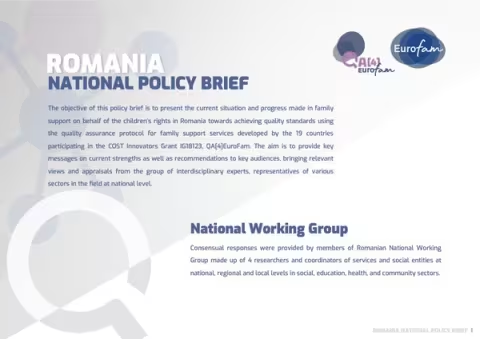
Romania National Policy Brief
Area
3.1
Description

Developed in collaboration with EurofamNet, the document details Romania's National Strategy for Parent Education, which establishes a multi-phased approach to ensure inclusive emotional, educational, and social assistance for families. It provides an expert, interdisciplinary assessment of national strengths and systemic recommendations, prioritising equity, lifelong learning, and cross-sectoral trust between schools and local communities. Ultimately, the brief acts as a tailored roadmap to help Romanian policymakers and practitioners standardise family service delivery, align with European quality protocols, and better safeguard children’s rights.

Brief description
This national policy brief outlines Romania’s strategic framework for quality family support, highlighting the country's shift towards structured parental education and collaborative, child-centred interventions.
Keywords
layered services; digital resources; family hubs; counselling services; cross-sector collaboration
Resource Title
Romania National Policy Brief
Topic
Parental support
Tools & Frameworks
Best practices
Language
EN
Relevant actions
Action 7-10
Use it to…
This briefing is a helpful broad overview Romania's transition in approach to family-based support and can be reviewed as a taster into the approach and lessons learned.
Where to look in this resource
- Definition of family support based on National Strategy of Parent Education (pg. 2) with support contextualised (pg. 2);
- Strategy implementation (pg. 3)
- Recommendations and lessons learned from strategy development implementation (pgs. 4-6)
Image
Romania National Policy Brief
Area
2.2
Description

Developed in collaboration with EurofamNet, the document details Romania's National Strategy for Parent Education, which establishes a multi-phased approach to ensure inclusive emotional, educational, and social assistance for families. It provides an expert, interdisciplinary assessment of national strengths and systemic recommendations, prioritising equity, lifelong learning, and cross-sectoral trust between schools and local communities. Ultimately, the brief acts as a tailored roadmap to help Romanian policymakers and practitioners standardise family service delivery, align with European quality protocols, and better safeguard children’s rights.

Brief description
This national policy brief outlines Romania’s strategic framework for quality family support, highlighting the country's shift towards structured parental education and collaborative, child-centred interventions.
Keywords
layered services; digital resources; family hubs; counselling services; cross-sector collaboration
Resource Title
Romania National Policy Brief
Topic
Early Intervention
Tools & Frameworks
Tools & Frameworks
Language
EN
Relevant actions
Action 1
Use it to…
This guidebook provides a practical, adaptable model for professionals and policymakers across Europe to help families recognise their own strengths, actively participate in decision-making, and improve their child's community inclusion via Early Childhood Intervention programming.
Where to look in this resource
- ECI Evaluation approaches and related goals (pgs. 241- 267) with practical exercises to support the approach (pgs. 257-267)
Image
Recommended Practices in Early Childhood Intervention. A Guidebook for professionals
Area
3.2
Description

Published by Eurlyaid (The European Association on Early Childhood Intervention), the guidebook establishes a framework of evidence-based practices that promote high-quality care across early intervention systems. It details a paradigm shift away from traditional, child-centred clinical deficits towards an ecological, inclusive, and family-centred approach that prioritises relationship-building and transdisciplinary teamwork.

Brief description
A comprehensive European resource designed to build and strengthen the capacity of practitioners working with infants and young children with developmental delays or disabilities and their families via Early Childhood Intervention.
Keywords
family-centred practice; transdisciplinary teams; inclusion; referral processes; outcome evaluation
Resource Title
Recommended Practices in Early Childhood Intervention. A Guidebook for professionals
Topic
Early Intervention
Tools & Frameworks
Tools & Frameworks
Language
EN
Relevant actions
Action 3
Use it to…
This guidebook provides a practical, adaptable model for professionals and policymakers across Europe to help families recognise their own strengths, actively participate in decision-making, and improve their child's community inclusion via Early Childhood Intervention programming.
Where to look in this resource
- Family-centred approach ECI Guidelines (pgs. 69 -90) with definitions (pg. 71), principles (pg. 72), rationale (pgs. 77-84), implementation (pgs. 85-88)
- Family-centred intervention approach (pgs. 93- 217) including information around referrals (pgs. 100-106), contacts (pgs. 107-116), assessment and its implementation (pgs. 117-189), monitoring and evaluation (pgs. 190-193; 197-204). There also are included practice, practical exercises to support the approach (pgs. 213-217)
Image
Recommended Practices in Early Childhood Intervention. A Guidebook for professionals
Area
3.1
Description

Published by Eurlyaid (The European Association on Early Childhood Intervention), the guidebook establishes a framework of evidence-based practices that promote high-quality care across early intervention systems. It details a paradigm shift away from traditional, child-centred clinical deficits towards an ecological, inclusive, and family-centred approach that prioritises relationship-building and transdisciplinary teamwork.

Brief description
A comprehensive European resource designed to build and strengthen the capacity of practitioners working with infants and young children with developmental delays or disabilities and their families via Early Childhood Intervention.
Keywords
family-centred practice; transdisciplinary teams; inclusion; referral processes; outcome evaluation
Resource Title
Recommended Practices in Early Childhood Intervention. A Guidebook for professionals
Topic
Early Intervention
Tools & Frameworks
Tools & Frameworks
Language
EN
Relevant actions
Action 2
Use it to…
This guidebook provides a practical, adaptable model for professionals and policymakers across Europe to help families recognise their own strengths, actively participate in decision-making, and improve their child's community inclusion via Early Childhood Intervention programming.
Where to look in this resource
Integrated, intersectoral and multidisciplinary ECI approaches and cooperation (pgs. 219-239) with practical exercises to support the approach (pgs. 238-239)
Image
Recommended Practices in Early Childhood Intervention. A Guidebook for professionals
Area
2.3
Description

Published by Eurlyaid (The European Association on Early Childhood Intervention), the guidebook establishes a framework of evidence-based practices that promote high-quality care across early intervention systems. It details a paradigm shift away from traditional, child-centred clinical deficits towards an ecological, inclusive, and family-centred approach that prioritises relationship-building and transdisciplinary teamwork.

Brief description
A comprehensive European resource designed to build and strengthen the capacity of practitioners working with infants and young children with developmental delays or disabilities and their families via Early Childhood Intervention.
Keywords
family-centred practice; transdisciplinary teams; inclusion; referral processes; outcome evaluation
Resource Title
Recommended Practices in Early Childhood Intervention. A Guidebook for professionals
Topic
Early Intervention
Tools & Frameworks
Tools & Frameworks
Language
EN
Relevant actions
Action 5-6
Use it to…
This guidebook provides a practical, adaptable model for professionals and policymakers across Europe to help families recognise their own strengths, actively participate in decision-making, and improve their child's community inclusion via Early Childhood Intervention programming.
Where to look in this resource
- Case study of Portugal's SNIPI ECI approach including its history and development (pgs. 53- 64), legislation (pg. 57; 63-64), goals (pgs. 58-59), ministerial and local structures (pgs. 59-63)
Image
Recommended Practices in Early Childhood Intervention. A Guidebook for professionals
Area
2.2
Description

Published by Eurlyaid (The European Association on Early Childhood Intervention), the guidebook establishes a framework of evidence-based practices that promote high-quality care across early intervention systems. It details a paradigm shift away from traditional, child-centred clinical deficits towards an ecological, inclusive, and family-centred approach that prioritises relationship-building and transdisciplinary teamwork.

Brief description
A comprehensive European resource designed to build and strengthen the capacity of practitioners working with infants and young children with developmental delays or disabilities and their families via Early Childhood Intervention.
Keywords
family-centred practice; transdisciplinary teams; inclusion; referral processes; outcome evaluation
Resource Title
Recommended Practices in Early Childhood Intervention. A Guidebook for professionals