Toolkit guide
Topic
Early Intervention
Tools & Frameworks
Tools & Frameworks
Language
EN
Use it to…
It helps policymakers generate robust, evidence‑based insights into the strengths and weaknesses of early childhood intervention systems. It supports informed decision‑making, policy development, and strategic investment to improve early identification, support, and outcomes for children with developmental risks or disabilities
Where to look in this resource
It provides an overview of what early childhood intervention services entails (p.21-25), a theory of change to support policymakers in defining objectives and outcomes (p.30) alongside an overview of different research methodologies to support an analysis of the ECD landscape (in relation to objectives and outcomes described in the theory of change) (Chapters 6-8)
Image
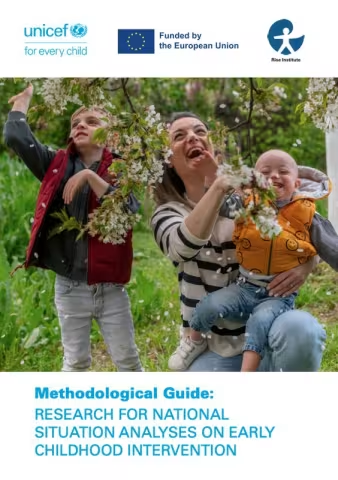
Methodological Guide: Research for national situation analysis on early childhood intervention
Area
2.1
Description

The guide outlines key concepts, research questions, and methodological steps for assessing early childhood intervention systems at national level. It supports the collection and analysis of qualitative and quantitative data across sectors such as health, education, and social services. Emphasis is placed on understanding governance structures, service availability, access, quality, workforce capacity, and coordination mechanisms. The guide is designed to ensure consistency, rigor, and comparability in national analyses, while allowing adaptation to country contexts.

Brief description
This methodological guide provides structured guidance for conducting national situation analyses on early childhood intervention. It supports systematic research to map existing services, policies, and gaps affecting young children requiring early intervention
Keywords
research methods; theory of change; system assessment; evidence generation; policy analysis
Resource Title
Methodological Guide: Research for national situation analysis on early childhood intervention

Topic
ECD
Tools & Frameworks
Tools & Frameworks
Language
EN
Use it to…
A useful analysis to facilitate selection of the most appropriate monitoring tools
Where to look in this resource
-The results include a heat map of accuracy and feasibility ratings for each measurement tool as well as an overview of each tool assessed
Image
Rating early child development outcome measurement tools for routine health programme use.
Area
2.1
Description

In this analysis, 27 tools for early childhood development outcome measurement (25 individual and 2 population-level tools) were rated across a range of accuracy and feasibility criteria

Brief description
This paper assesses the accuracy and feasibility of ECD measurement tools
Keywords
measurement tools; developmental assessment; tool selection; feasibility analysis; outcome monitoring
Resource Title
Rating early child development outcome measurement tools for routine health programme use.
Topic
Early Detection
Tools & Frameworks
Studies
Language
EN
Use it to…
The report helps policymakers understand where early childhood needs were overlooked during the pandemic and why this matters for long‑term health, equity, and human capital. It provides evidence to inform recovery planning, strengthen resilience in ECD systems, and ensure young children are prioritized in future emergencies.
Where to look in this resource
Highlights how disruptions to health services can lead to widespread missed opportunities for early detection, strengthening the case for resilient system design and the need for intervention
Image
Missed opportunities: The unknown impact of the COVID-19 pandemic on early childhood development in the WHO European region
Area
2.1
Description

This report explores the largely unmeasured consequences of the COVID‑19 pandemic on early childhood development in the WHO European Region. It reviews disruptions to essential services such as health care, early learning, childcare, and family support, as well as increased stressors on caregivers and households. The analysis highlights significant data gaps and missed opportunities to monitor, protect, and prioritize young children’s development during crisis response and recovery. It calls for stronger systems, better data, and child‑centred policies to mitigate long‑term developmental and social impacts.

Brief description
Missed opportunities examines how the COVID‑19 pandemic has affected early childhood development across the WHO European Region, highlighting gaps in evidence and response. The report underscores concerns about the hidden and long‑term impacts on young children and families.
Keywords
pandemic impact; service disruption; health inequalities; data gaps; system resilience
Resource Title
Missed opportunities: The unknown impact of the COVID-19 pandemic on early childhood development in the WHO European region
Topic
Parental support
Tools & Frameworks
Best practices
Language
EN
Use it to…
Provides a practical systems framework for designing, strengthening and scaling parenting support programmes.
Where to look in this resource
Framework for multi-sectoral support for parents
Image
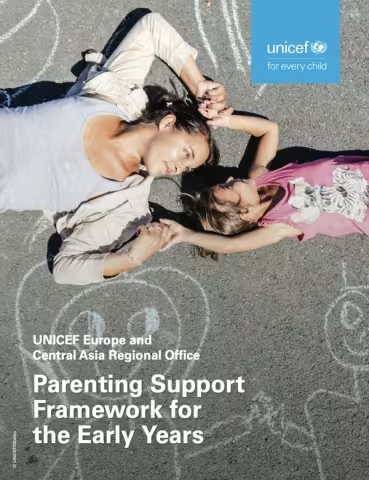
Parenting Support Framework for the Early Years
Area
1.3
Description

Developed by UNICEF Europe and Central Asia, the framework promotes a comprehensive, evidence-informed and adaptable approach to supporting parents and caregivers. It emphasises nurturing care, positive parenting, social and behaviour change approaches, universal and progressive service provision, and coordinated action across health, education, social protection and community sectors.

Brief description
A conceptual framework that provides a unified vision for parenting support from pregnancy to age 8, helping governments and stakeholders strengthen parenting support systems through coordinated action across sectors.
Keywords
caregiver support, positive parenting, social and behaviour change, nurturing care, conceptual framework
Resource Title
Parenting Support Framework for the Early Years
Topic
Parental support
Tools & Frameworks
Best practices
Language
EN
Use it to…
Provides a practical systems framework for designing, strengthening and scaling parenting support programmes.
Where to look in this resource
Framework for multi-sectoral support for parents
Image
Parenting Support Framework for the Early Years
Area
1.2
Description

Developed by UNICEF Europe and Central Asia, the framework promotes a comprehensive, evidence-informed and adaptable approach to supporting parents and caregivers. It emphasises nurturing care, positive parenting, social and behaviour change approaches, universal and progressive service provision, and coordinated action across health, education, social protection and community sectors.

Brief description
A conceptual framework that provides a unified vision for parenting support from pregnancy to age 8, helping governments and stakeholders strengthen parenting support systems through coordinated action across sectors.
Keywords
caregiver support, positive parenting, social and behaviour change, nurturing care, conceptual framework
Resource Title
Parenting Support Framework for the Early Years
Topic
ECD
Tools & Frameworks
Tools & Frameworks
Language
EN
Use it to…
The framework offers policymakers a coherent, evidence‑based structure for designing and aligning national ECD strategies across sectors. It supports informed decision‑making by highlighting priority actions that contribute to improved child outcomes, social cohesion, and long‑term human capital development.
Where to look in this resource
Pages 1-11 highlight the background and key areas for action for development, nutrition and physical health, to support the case for ECD policies
Image
Framework on Early Childhood Development in the WHO European Region
Area
1.2
Description

Comprehensive strategic vision for improving outcomes for young children by promoting healthy development, well-being and equity from pregnancy through the early years. The framework highlights the critical importance of early childhood as a foundation for lifelong health, learning and social participation, and calls for coordinated action across health, education, social care and other sectors to address the wider determinants of child development. It provides guidance for countries to strengthen policies, systems and workforce capacity to ensure that every child has the best possible start in life

Brief description
The Framework on Early Childhood Development in the WHO European Region outlines a strategic approach to support healthy development, well‑being, and equity for young children across the region. It emphasizes integrated, multisectoral action to ensure all children have the best possible start in life
Keywords
health equity; life-course approach; policy development; child wellbeing; cross-sector collaboration
Resource Title
Framework on Early Childhood Development in the WHO European Region
Topic
Early Intervention
Tools & Frameworks
Tools & Frameworks
Language
EN
Relevant actions
Action 2
Use it to…
It provides a clear, evidence‑based justification for public investment in ECI and supports policymakers in framing early intervention as a system‑level responsibility rather than a niche or discretionary service.
Where to look in this resource
It supports policymakers to select policy priorities by providing a justification of the importance of ECI (p.4) and what a family-centred ECI service requires (p.5-6)
Image
Building a sustainable and inclusive Early Childhood Intervention system: Policy brief
Area
1.1
Description

The brief synthesizes evidence on why early childhood intervention is an essential component of effective ECD systems, highlighting the consequences of delayed identification and fragmented service delivery. It presents key principles for system design, including inclusiveness, family‑centred approaches, cross‑sectoral coordination, and long‑term sustainability. The document focuses on policy levers rather than service models, making it applicable across diverse national contexts

Brief description
This policy brief outlines the rationale and core components for establishing sustainable, inclusive early childhood intervention (ECI) systems that respond to developmental risks early and equitably.
Keywords
service integration; family-centred care; sustainability; equity of access; policy development
Resource Title
Building a sustainable and inclusive Early Childhood Intervention system: Policy brief
Topic
Parenting support
Tools & Frameworks
Best practices
Language
EN
Relevant actions
Action 7-10
Use it to…
Demonstrates how parenting support can be embedded within national health, education, and social care systems through a tiered model that offers universal support for all families while providing additional evidence-based interventions for those with greater needs
Where to look in this resource
Highlights how parenting support interventions are delivered through universal, targeted and intensive services, supported by evidence-informed decision-making.
Area
2.2
Description

Estonia’s Parent Support Strategy provides a universal, layered system of parenting support that combines routine guidance through child health services with targeted and intensive interventions for families with additional needs. Support includes parenting programmes such as Incredible Years, digital resources, family hubs, mediation services, and specialist therapeutic support.

Brief description
A universal, national offer of parenting support which is comprehensive and ‘layered’ (providing universal support for all parents, targeted support for those at risk, and intensive support for complex cases).
Keywords
parenting support; layered support; policy; children's rights; incredible years
Resource Title
Estonia's layered parenting support system
Topic
Parenting support
Tools & Frameworks
Best practices
Language
EN
Use it to…
Key policy frameworks, statutory guidance and evidence underpinning early years, child health and family support services, helping policymakers inform solutions.
Where to look in this resource
Informs home visiting as a strategy for universal parenting support
Area
2.1
Description

Key Scottish policies, legislation, guidance and evidence relevant to child health, early childhood development, health visiting and family support, including Universal Health Visiting Pathway, child protection guidance and maternal and child health policy

Brief description
Scottish policy and guidance for child health, health visiting and early years services
Keywords
health visiting; policy; legislation; child health; early years
Resource Title
Policy, legislation and guidance on health/home visiting -Scotland
Topic
Parenting support
Tools & Frameworks
Tools & Frameworks
Language
EN
Relevant actions
Action 8-9
Use it to…
Offers guidance on caregiver skills training for families of children aged 2–9 years with developmental delays or disabilities
Where to look in this resource
A practical, scalable approach to supporting children with developmental delays and disabilities through caregiver-led interventions, helping policymakers strengthen inclusive early childhood development services and expand access to support
Area
2.2
Description

The programme provides evidence-based guidance for supporting families of children aged 2-9 years with developmental delays or disabilities. Designed for delivery in community and low-resource settings, it equips caregivers with practical skills to promote communication, engagement, positive behaviour and daily living skills, while offering a scalable model for strengthening early identification and family-centred support services

Brief description
A scalable, evidence-based approach to helping caregivers support the development and well-being of children with developmental delays or disabilities. [who.int], [who.int]
Keywords
caregiver training; developmental disabilities; capacity building; family support; inclusion
Resource Title
WHO Caregiver Skills Training