Toolkit guide
Topic
Early Detection
Tools & Frameworks
Studies
Language
EN
Use it to…
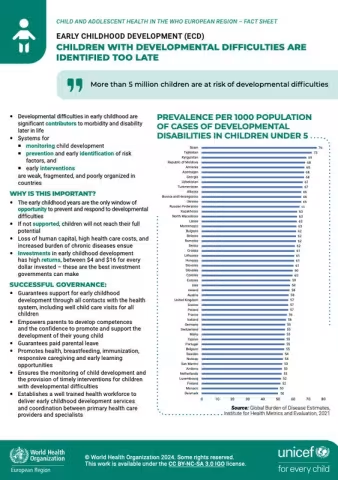
The factsheet offers policymakers a snapshot of the prevalence of developmental difficulties that supports advocacy, agenda‑setting, and communication with stakeholders. It helps translate research into actionable messages that justify investment in integrated, early childhood policies and services.
Image
ECD Factsheet on Developmental Difficulties
Area
1.3
Description

The ECD Factsheet synthesizes key evidence and supports the importance of early detection. The factsheet presents data and messages in a clear, accessible format, making complex evidence easy to understand. It is designed for quick reference by decision‑makers, practitioners, and partners.

Brief description
The ECD Factsheet provides a concise overview of the importance of early detection of developmental difficulties. It presents essential facts and messages to support awareness and advocacy for early detection.
Keywords
advocacy resource; developmental outcomes; risk factors; evidence synthesis; policy messaging
Resource Title
ECD Factsheet on Developmental Difficulties
Topic
Early Detection
Tools & Frameworks
Studies
Language
EN
Relevant actions
Action 4
Use it to…
The factsheet offers policymakers a snapshot of the prevalence of developmental difficulties that supports advocacy, agenda‑setting, and communication with stakeholders. It helps translate research into actionable messages that justify investment in integrated, early childhood policies and services.
Where to look in this resource
The factsheet highlights the prevalence of developmental difficulties, offering evidence to support the case for strong ECD policies. Recommendations are summarised for interventions such as parental support, workforce training and developmental monitoring, to help focus areas for intervention.
Image
ECD Factsheet on Developmental Difficulties
Area
1.1
Description

The ECD Factsheet synthesizes key evidence and supports the importance of early detection. The factsheet presents data and messages in a clear, accessible format, making complex evidence easy to understand. It is designed for quick reference by decision‑makers, practitioners, and partners.

Brief description
The ECD Factsheet provides a concise overview of the importance of early detection of developmental difficulties. It presents essential facts and messages to support awareness and advocacy for early detection.
Keywords
advocacy resource; developmental outcomes; risk factors; evidence synthesis; policy messaging
Resource Title
ECD Factsheet on Developmental Difficulties
Topic
ECD
Tools & Frameworks
Best practices
Language
EN
Relevant actions
Actions 1-2
Use it to…
The strategy can be used as an example of best practice by policymakers, demonstrating an evidence-based, collaborative approach with a strong focus on health equity.
Where to look in this resource
Pages 21-27 outline the context and importance of supporting ECD, as well as the strategic vision. Objectives 1 and 2 set out approaches to parental support and the need for resources and services for parents. Objective 3 sets out the context and interventions to address inequalities related to poverty and discrimination. Objectives 4-6 highlight the need for healthcare interventions to support physical and mental health. Goal D (pages 104-115) sets out areas to consider for effective implementation, including governance, workforce and monitoring. Pages 117-122 set out specific actions for implementation, while pages 122-171 outline specific strategic actions across the objectives
Image
Ireland's first five strategy
Area
2.2
Description

A Whole-of-Government 10-year strategy focused on supporting the development, health, and well-being of children from birth to age five and their families. The strategy is built on four main goals: strengthening families and communities, ensuring optimum physical and mental health, promoting positive play-based early learning, and creating an effective early childhood system.

Brief description
Ireland's First 5 strategy is a best practice example indicating how ECD can be addressed across the whole of government, including key areas for intervention and using a progressive universalism approach.
Keywords
whole-of-government; progressive universalism; family services; health equity; implementation planning
Resource Title
Ireland's first five strategy
Topic
ECD
Tools & Frameworks
Tools & Frameworks
Language
EN
Use it to…
This tool enables policymakers to make informed, strategic decisions by providing a clear, evidence‑based picture of ECD system performance and gaps. It supports priority setting, cross‑sector coordination, and the development of coherent national ECD strategies aligned with international standards and country‑specific needs.
Where to look in this resource
- Tool description (pgs. 3-4);
- Tool's nine priority areas with associated goals overview (pgs. 4-5) followed by breakdown by priority area (Enabling environment for strengthening support for ECD and protection of child rights (pgs. 7-8); Parenting and responsive caregiving (pg. 9); Child health (pgs. 10-11); Nutrition (pgs. 12 -14); Play and learning (pg. 15); Developmental monitoring (pgs. 16-17); Early intervention for children with developmental difficulties (pgs. 18-19); Safety and security (pgs. 20-21); Parental well-being (pgs. 22-23));
- General guidance and steps for using the tool and measuring results (pgs. 24-28) with country-level specific and process advice (pgs. 26-29).
Image
Early childhood development country situation analysis- Assessment tool and methodological guidance

Area
2.1
Description

The ECD Country Situation Analysis offers a comprehensive framework and step‑by‑step methodology for assessing how countries support early childhood development at national and subnational levels. It examines governance, financing, service delivery, workforce capacity, data systems, and equity considerations across relevant sectors such as health, education, and social protection. The tool promotes participatory and multisectoral analysis, encouraging collaboration among government actors, partners, and stakeholders. Its findings are intended to inform evidence‑based planning, policy reform, and investment decisions.

Brief description
The Early Childhood Development (ECD) Country Situation Analysis is a structured assessment tool developed to help countries systematically review the status of ECD policies, services, and systems. It provides methodological guidance to identify strengths, gaps, and priorities for action across sectors.
Keywords
situation analysis; service mapping; governance assessment; workforce capacity; policy planning
Resource Title
Early childhood development country situation analysis- Assessment tool and methodological guidance
Topic
ECD
Tools & Frameworks
Tools & Frameworks
Language
EN
Relevant actions
Action 1
Use it to…
This tool enables policymakers to make informed, strategic decisions by providing a clear, evidence‑based picture of ECD system performance and gaps. It supports priority setting, cross‑sector coordination, and the development of coherent national ECD strategies aligned with international standards and country‑specific needs.
Where to look in this resource
- Tool description (pgs. 3-4);
- Tool's nine priority areas with associated goals overview (pgs. 4-5) followed by breakdown by priority area (Enabling environment for strengthening support for ECD and protection of child rights (pgs. 7-8); Parenting and responsive caregiving (pg. 9); Child health (pgs. 10-11); Nutrition (pgs. 12 -14); Play and learning (pg. 15); Developmental monitoring (pgs. 16-17); Early intervention for children with developmental difficulties (pgs. 18-19); Safety and security (pgs. 20-21); Parental well-being (pgs. 22-23));
- General guidance and steps for using the tool and measuring results (pgs. 24-28) with country-level specific and process advice (pgs. 26-29).
Image
Early childhood development country situation analysis- Assessment tool and methodological guidance
Area
1.1
Description

The ECD Country Situation Analysis offers a comprehensive framework and step‑by‑step methodology for assessing how countries support early childhood development at national and subnational levels. It examines governance, financing, service delivery, workforce capacity, data systems, and equity considerations across relevant sectors such as health, education, and social protection. The tool promotes participatory and multisectoral analysis, encouraging collaboration among government actors, partners, and stakeholders. Its findings are intended to inform evidence‑based planning, policy reform, and investment decisions.

Brief description
The Early Childhood Development (ECD) Country Situation Analysis is a structured assessment tool developed to help countries systematically review the status of ECD policies, services, and systems. It provides methodological guidance to identify strengths, gaps, and priorities for action across sectors.
Keywords
situation analysis; service mapping; governance assessment; workforce capacity; policy planning
Resource Title
Early childhood development country situation analysis- Assessment tool and methodological guidance
Topic
ECD
Tools & Frameworks
Tools & Frameworks
Language
EN
Relevant actions
Action 2
Use it to…
The framework offers policymakers a coherent, evidence‑based structure for designing and aligning national ECD strategies across sectors. It supports informed decision‑making by highlighting priority actions that contribute to improved child outcomes, social cohesion, and long‑term human capital development.
Where to look in this resource
Key actions for developmental monitoring and assessment are laid out (pages 11-13), including the use of appropriate developmental monitoring tools.
Image
Framework on Early Childhood Development in the WHO European Region
Area
3.2
Description

Comprehensive strategic vision for improving outcomes for young children by promoting healthy development, well-being and equity from pregnancy through the early years. The framework highlights the critical importance of early childhood as a foundation for lifelong health, learning and social participation, and calls for coordinated action across health, education, social care and other sectors to address the wider determinants of child development. It provides guidance for countries to strengthen policies, systems and workforce capacity to ensure that every child has the best possible start in life

Brief description
The Framework on Early Childhood Development in the WHO European Region outlines a strategic approach to support healthy development, well‑being, and equity for young children across the region. It emphasizes integrated, multisectoral action to ensure all children have the best possible start in life
Keywords
health equity; life-course approach; policy development; child wellbeing; cross-sector collaboration
Resource Title
Framework on Early Childhood Development in the WHO European Region
Topic
ECD
Tools & Frameworks
Tools & Frameworks
Language
EN
Use it to…
The framework offers policymakers a coherent, evidence‑based structure for designing and aligning national ECD strategies across sectors. It supports informed decision‑making by highlighting priority actions that contribute to improved child outcomes, social cohesion, and long‑term human capital development.
Where to look in this resource
The framework highlights the need to review existing harmful practices (page 15) as well as sectors to consider for policy review
Image
Framework on Early Childhood Development in the WHO European Region
Area
2.1
Description

Comprehensive strategic vision for improving outcomes for young children by promoting healthy development, well-being and equity from pregnancy through the early years. The framework highlights the critical importance of early childhood as a foundation for lifelong health, learning and social participation, and calls for coordinated action across health, education, social care and other sectors to address the wider determinants of child development. It provides guidance for countries to strengthen policies, systems and workforce capacity to ensure that every child has the best possible start in life

Brief description
The Framework on Early Childhood Development in the WHO European Region outlines a strategic approach to support healthy development, well‑being, and equity for young children across the region. It emphasizes integrated, multisectoral action to ensure all children have the best possible start in life
Keywords
health equity; life-course approach; policy development; child wellbeing; cross-sector collaboration
Resource Title
Framework on Early Childhood Development in the WHO European Region
Topic
ECD
Tools & Frameworks
Tools & Frameworks
Language
EN
Use it to…
The framework offers policymakers a coherent, evidence‑based structure for designing and aligning national ECD strategies across sectors. It supports informed decision‑making by highlighting priority actions that contribute to improved child outcomes, social cohesion, and long‑term human capital development.
Where to look in this resource
The framework sets out key action points across areas for policy intervention, including monitoring and surveillance.
Image
Framework on Early Childhood Development in the WHO European Region
Area
1.3
Description

Comprehensive strategic vision for improving outcomes for young children by promoting healthy development, well-being and equity from pregnancy through the early years. The framework highlights the critical importance of early childhood as a foundation for lifelong health, learning and social participation, and calls for coordinated action across health, education, social care and other sectors to address the wider determinants of child development. It provides guidance for countries to strengthen policies, systems and workforce capacity to ensure that every child has the best possible start in life

Brief description
The Framework on Early Childhood Development in the WHO European Region outlines a strategic approach to support healthy development, well‑being, and equity for young children across the region. It emphasizes integrated, multisectoral action to ensure all children have the best possible start in life
Keywords
health equity; life-course approach; policy development; child wellbeing; cross-sector collaboration
Resource Title
Framework on Early Childhood Development in the WHO European Region
Topic
ECD
Tools & Frameworks
Tools & Frameworks
Language
EN
Relevant actions
Action 1-4
Use it to…
The framework offers policymakers a coherent, evidence‑based structure for designing and aligning national ECD strategies across sectors. It supports informed decision‑making by highlighting priority actions that contribute to improved child outcomes, social cohesion, and long‑term human capital development.
Where to look in this resource
Pages 1-11 highlight the background and key areas for action for development, nutrition and physical health, to support the case for ECD policies
Image
Framework on Early Childhood Development in the WHO European Region
Area
1.1
Description

Comprehensive strategic vision for improving outcomes for young children by promoting healthy development, well-being and equity from pregnancy through the early years. The framework highlights the critical importance of early childhood as a foundation for lifelong health, learning and social participation, and calls for coordinated action across health, education, social care and other sectors to address the wider determinants of child development. It provides guidance for countries to strengthen policies, systems and workforce capacity to ensure that every child has the best possible start in life

Brief description
The Framework on Early Childhood Development in the WHO European Region outlines a strategic approach to support healthy development, well‑being, and equity for young children across the region. It emphasizes integrated, multisectoral action to ensure all children have the best possible start in life
Keywords
health equity; life-course approach; policy development; child wellbeing; cross-sector collaboration
Resource Title
Framework on Early Childhood Development in the WHO European Region
Topic
ECD
Tools & Frameworks
Tools & Frameworks
Language
EN
Relevant actions
Action 2
Use it to…
The framework helps policymakers align national strategies with evidence‑based, rights‑based approaches to early childhood development. It provides a common reference to support coordinated action across sectors, enabling more effective investments that improve population health, social outcomes, and long‑term economic development.
Where to look in this resource
Chapter 5 sets out areas for policy intervention across the health, education and social care sectors.
Image
The Nurturing Care Framework for Early Childhood Development
Area
3.1
Description

The Nurturing Care Framework (NCF) provides an evidence-based roadmap for supporting early childhood development. It outlines the policies, services and supportive environments needed to help parents and caregivers provide nurturing care and ensure children reach their full developmental potential. The framework emphasises five key components of nurturing care: good health, adequate nutrition, responsive caregiving, opportunities for early learning, and safety and security

Brief description
The Nurturing Care Framework draws on state-of-the-art evidence on how early childhood development unfolds to set out the most effective policies and services that will help parents and caregivers provide nurturing care for infants and young children.
Keywords
nurturing care; responsive caregiving; child wellbeing; multisectoral policy; systems strengthening
Resource Title
The Nurturing Care Framework for Early Childhood Development