Toolkit guide
Topic
Early Intervention
Tools & Frameworks
Tools & Frameworks
Language
EN
Use it to…
It provides a clear, evidence‑based justification for public investment in ECI and supports policymakers in framing early intervention as a system‑level responsibility rather than a niche or discretionary service.
Where to look in this resource
It supports policymakers to select policy priorities by providing a justification of the importance of ECI (p.4) and what a family-centred ECI service requires (p.5-6)
Image
Building a sustainable and inclusive Early Childhood Intervention system: Policy brief
Area
1.3
Description

The brief synthesizes evidence on why early childhood intervention is an essential component of effective ECD systems, highlighting the consequences of delayed identification and fragmented service delivery. It presents key principles for system design, including inclusiveness, family‑centred approaches, cross‑sectoral coordination, and long‑term sustainability. The document focuses on policy levers rather than service models, making it applicable across diverse national contexts

Brief description
This policy brief outlines the rationale and core components for establishing sustainable, inclusive early childhood intervention (ECI) systems that respond to developmental risks early and equitably.
Keywords
service integration; family-centred care; sustainability; equity of access; policy development
Resource Title
Building a sustainable and inclusive Early Childhood Intervention system: Policy brief
Topic
Early Intervention
Tools & Frameworks
Tools & Frameworks
Language
EN
Relevant actions
Action 3
Use it to…
It helps policymakers generate robust, evidence‑based insights into the strengths and weaknesses of early childhood intervention systems. It supports informed decision‑making, policy development, and strategic investment to improve early identification, support, and outcomes for children with developmental risks or disabilities
Where to look in this resource
It provides an overview of what early childhood intervention services entails (p.21-25), a theory of change to support policymakers in defining objectives and outcomes (p.30) alongside an overview of different research methodologies to support an analysis of the ECD landscape (in relation to objectives and outcomes described in the theory of change) (Chapters 6-8)
Image
Methodological Guide: Research for national situation analysis on early childhood intervention
Area
1.1
Description

The guide outlines key concepts, research questions, and methodological steps for assessing early childhood intervention systems at national level. It supports the collection and analysis of qualitative and quantitative data across sectors such as health, education, and social services. Emphasis is placed on understanding governance structures, service availability, access, quality, workforce capacity, and coordination mechanisms. The guide is designed to ensure consistency, rigor, and comparability in national analyses, while allowing adaptation to country contexts.

Brief description
This methodological guide provides structured guidance for conducting national situation analyses on early childhood intervention. It supports systematic research to map existing services, policies, and gaps affecting young children requiring early intervention
Keywords
research methods; theory of change; system assessment; evidence generation; policy analysis
Resource Title
Methodological Guide: Research for national situation analysis on early childhood intervention

Topic
Early Intervention
Tools & Frameworks
Best practices
Language
EN
Relevant actions
Action 5
Use it to…
It provides concrete examples of how family‑centred ECI principles can be operationalised within public systems, supporting policy discussions on feasibility, service design, and system reform.
Where to look in this resource
Pages 3-7 outline best practice examples for using situation analyses to identify evidence, and for improving design and delivery of ECI services
Image
Family-centered services for early childhood intervention: Highlighting initiatives in Croatia and Serbia
Area
2.2
Description

The paper documents how early childhood intervention services in Croatia and Serbia have adopted family‑centred principles, including active caregiver involvement, coordination across sectors, and individualized support for children with developmental difficulties. It illustrates how services have been adapted within existing institutional systems rather than developed as stand‑alone programmes. The focus is on practical implementation within real policy and service contexts.

Brief description
This resource highlights family‑centred early childhood intervention approaches through case examples from Croatia and Serbia
Keywords
family-centred care; service coordination; caregiver engagement; inclusion; system reform
Resource Title
Family-centered services for early childhood intervention: Highlighting initiatives in Croatia and Serbia
Topic
ECD
Tools & Frameworks
Studies
Language
EN
Relevant actions
Action 2
Use it to…
It provides a robust scientific rationale for prioritising early childhood development within public health and NCD prevention strategies, framing ECD as a determinant of lifelong health rather than solely an education or social issue
Where to look in this resource
Pages 5-13 outline the evidence that early childhood experiences have a lifelong impact on health and wellbeing. Page 14-17 highlight key areas for policy intervention, such as parenting support and recommendations for primary health care.
Image
Connecting the Brain to the Rest of the Body: Early Childhood Development and Lifelong Health Are Deeply Intertwined
Area
1.1
Description

The paper synthesizes evidence from neuroscience, biology, and public health to explain how early experiences influence the development and interaction of multiple body systems, including the immune, metabolic, and stress response systems. It demonstrates how early adversity can contribute to preventable chronic diseases and mental health conditions later in life. The analysis links ECD directly to long‑term health outcomes and health system costs.

Brief description
This paper examines how early childhood development shapes lifelong physical and mental health through biological and psychosocial pathways.
Keywords
life-course health; toxic stress; brain development; chronic disease prevention; public health evidence
Resource Title
Connecting the Brain to the Rest of the Body: Early Childhood Development and Lifelong Health Are Deeply Intertwined
Topic
Early Detection
Tools & Frameworks
Tools & Frameworks
Language
EN
Relevant actions
Action 1
Use it to…
Can be used to inform the introduction of developmental monitoring as part of routine health service provision
Image
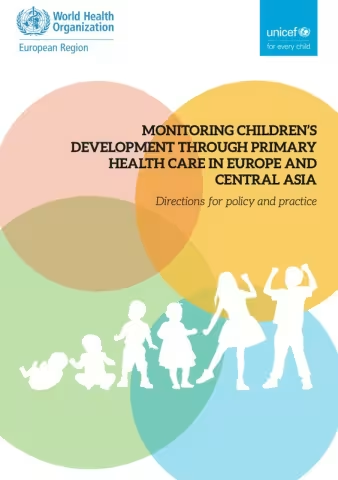
Monitoring children’s development through primary health care in Europe and Central Asia
Area
3.2
Description

The report examines how child development monitoring is integrated into primary health care services across countries in Europe and Central Asia. It reviews existing policies, practices, and tools used to assess developmental progress in early childhood, identifying both strengths and gaps. The publication emphasizes the importance of early detection, timely referral, and continuity of care within routine health services. It provides practical directions to strengthen systems, workforce capacity, and data use to support early childhood development.

Brief description
Report exploring how child development monitoring is integrated into primary health care services across countries in Europe and Central Asia. This resource supports policymakers in strengthening primary health care as a platform for early detection and intervention, helping prevent long‑term developmental and health inequities. It offers evidence‑based guidance to inform policy reforms, improve service integration, and enhance system responsiveness for young children and families.
Keywords
developmental monitoring; primary health care; referral pathways; surveillance systems; workforce development
Resource Title
Monitoring children’s development through primary health care in Europe and Central Asia
Topic
Early Detection
Tools & Frameworks
Tools & Frameworks
Language
EN
Relevant actions
Action 1-4
Use it to…
Can be used to inform the introduction of developmental monitoring as part of routine health service provision
Image
Monitoring children’s development through primary health care in Europe and Central Asia
Area
2.3
Description

The report examines how child development monitoring is integrated into primary health care services across countries in Europe and Central Asia. It reviews existing policies, practices, and tools used to assess developmental progress in early childhood, identifying both strengths and gaps. The publication emphasizes the importance of early detection, timely referral, and continuity of care within routine health services. It provides practical directions to strengthen systems, workforce capacity, and data use to support early childhood development.

Brief description
Report exploring how child development monitoring is integrated into primary health care services across countries in Europe and Central Asia. This resource supports policymakers in strengthening primary health care as a platform for early detection and intervention, helping prevent long‑term developmental and health inequities. It offers evidence‑based guidance to inform policy reforms, improve service integration, and enhance system responsiveness for young children and families.
Keywords
developmental monitoring; primary health care; referral pathways; surveillance systems; workforce development
Resource Title
Monitoring children’s development through primary health care in Europe and Central Asia
Topic
Early Detection
Tools & Frameworks
Tools & Frameworks
Language
EN
Use it to…
Can be used to inform the introduction of developmental monitoring as part of routine health service provision
Image
Monitoring children’s development through primary health care in Europe and Central Asia
Area
2.1
Description

The report examines how child development monitoring is integrated into primary health care services across countries in Europe and Central Asia. It reviews existing policies, practices, and tools used to assess developmental progress in early childhood, identifying both strengths and gaps. The publication emphasizes the importance of early detection, timely referral, and continuity of care within routine health services. It provides practical directions to strengthen systems, workforce capacity, and data use to support early childhood development.

Brief description
Report exploring how child development monitoring is integrated into primary health care services across countries in Europe and Central Asia. This resource supports policymakers in strengthening primary health care as a platform for early detection and intervention, helping prevent long‑term developmental and health inequities. It offers evidence‑based guidance to inform policy reforms, improve service integration, and enhance system responsiveness for young children and families.
Keywords
developmental monitoring; primary health care; referral pathways; surveillance systems; workforce development
Resource Title
Monitoring children’s development through primary health care in Europe and Central Asia
Topic
Early Detection
Tools & Frameworks
Tools & Frameworks
Language
EN
Use it to…
Can be used to inform the introduction of developmental monitoring as part of routine health service provision
Image
Monitoring children’s development through primary health care in Europe and Central Asia
Area
1.3
Description

The report examines how child development monitoring is integrated into primary health care services across countries in Europe and Central Asia. It reviews existing policies, practices, and tools used to assess developmental progress in early childhood, identifying both strengths and gaps. The publication emphasizes the importance of early detection, timely referral, and continuity of care within routine health services. It provides practical directions to strengthen systems, workforce capacity, and data use to support early childhood development.

Brief description
Report exploring how child development monitoring is integrated into primary health care services across countries in Europe and Central Asia. This resource supports policymakers in strengthening primary health care as a platform for early detection and intervention, helping prevent long‑term developmental and health inequities. It offers evidence‑based guidance to inform policy reforms, improve service integration, and enhance system responsiveness for young children and families.
Keywords
developmental monitoring; primary health care; referral pathways; surveillance systems; workforce development
Resource Title
Monitoring children’s development through primary health care in Europe and Central Asia
Topic
Early Detection
Tools & Frameworks
Tools & Frameworks
Language
EN
Relevant actions
Action 3
Use it to…
Can be used to inform the introduction of developmental monitoring as part of routine health service provision
Where to look in this resource
Chapter 1 outlines the importance of developmental monitoring and the key role of the health sector, to support evidence building and identification of policy objectives. Chapter 3.1 identifies practices across countries in Europe and Central Asia, to allow identification of best practices. Chapter 3.2 - 3.6 outlines recommendations for practical implementation including selection of monitoring tools, financing and workforce as well as governance and evaluation.
Image
Monitoring children’s development through primary health care in Europe and Central Asia
Area
1.1
Description

The report examines how child development monitoring is integrated into primary health care services across countries in Europe and Central Asia. It reviews existing policies, practices, and tools used to assess developmental progress in early childhood, identifying both strengths and gaps. The publication emphasizes the importance of early detection, timely referral, and continuity of care within routine health services. It provides practical directions to strengthen systems, workforce capacity, and data use to support early childhood development.

Brief description
Report exploring how child development monitoring is integrated into primary health care services across countries in Europe and Central Asia. This resource supports policymakers in strengthening primary health care as a platform for early detection and intervention, helping prevent long‑term developmental and health inequities. It offers evidence‑based guidance to inform policy reforms, improve service integration, and enhance system responsiveness for young children and families.
Keywords
developmental monitoring; primary health care; referral pathways; surveillance systems; workforce development
Resource Title
Monitoring children’s development through primary health care in Europe and Central Asia
Topic
Early Detection
Tools & Frameworks
Studies
Language
EN
Relevant actions
Action 4
Use it to…
The report helps policymakers understand where early childhood needs were overlooked during the pandemic and why this matters for long‑term health, equity, and human capital. It provides evidence to inform recovery planning, strengthen resilience in ECD systems, and ensure young children are prioritized in future emergencies.
Where to look in this resource
Highlights how disruptions to health services can lead to widespread missed opportunities for early detection, strengthening the case for resilient system design and the need for intervention
Image
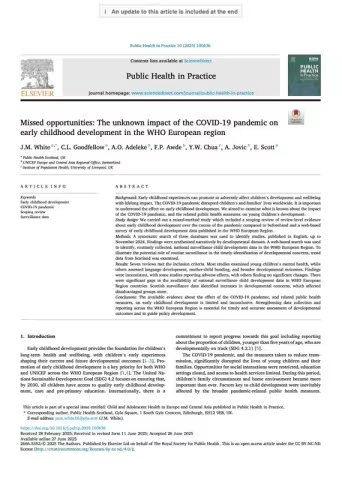
Missed opportunities: The unknown impact of the COVID-19 pandemic on early childhood development in the WHO European region
Area
1.1
Description

This report explores the largely unmeasured consequences of the COVID‑19 pandemic on early childhood development in the WHO European Region. It reviews disruptions to essential services such as health care, early learning, childcare, and family support, as well as increased stressors on caregivers and households. The analysis highlights significant data gaps and missed opportunities to monitor, protect, and prioritize young children’s development during crisis response and recovery. It calls for stronger systems, better data, and child‑centred policies to mitigate long‑term developmental and social impacts.

Brief description
Missed opportunities examines how the COVID‑19 pandemic has affected early childhood development across the WHO European Region, highlighting gaps in evidence and response. The report underscores concerns about the hidden and long‑term impacts on young children and families.
Keywords
pandemic impact; service disruption; health inequalities; data gaps; system resilience
Resource Title
Missed opportunities: The unknown impact of the COVID-19 pandemic on early childhood development in the WHO European region