Toolkit guide
Source
WHO
Topic
Guaranteeing access to early intervention and mental health services and support
Tools & Frameworks
Guidelines
Language
EN
Relevant actions
Layers 1, 2 & 3
Use it to…
Identify interventions with a strong evidence base to prioritise for policy adoption and scale-up.
Where to look in this resource
The “Summary of recommendations” sets out the headline interventions to prioritise across the layers, and the “Evidence and recommendations” section gives the evidence behind each; the detailed evidence summaries are in the annexes.
Image
Guidelines on promotive and preventive mental health interventions for adolescents (WHO 2021)
Setting
Year
2021
Area
2.2
Description

Evidence-based recommendations on interventions that promote mental well-being and prevent mental health conditions among adolescents. Drawing on systematic reviews, the resource outlines effective approaches across settings—such as schools, families, and communities—supporting countries in implementing interventions that are both impactful and appropriate to adolescents’ developmental needs.

Brief description
WHO recommendations on evidence-based interventions to promote adolescent mental wellbeing and prevent mental health conditions.
Country
INTERNATIONAL
Keywords
promotion, prevention, systematic review, scale-up, evidence-based interventions
Resource Title
Guidelines on promotive and preventive mental health interventions for adolescents (WHO 2021)
Source
WHO
Topic
monitoring adolescent health
Tools & Frameworks
Guidelines
Language
EN
Relevant actions
Actions 1 & 2
Use it to…
track mental health and wellbeing outcomes using a standardised, comparable framework.
Where to look in this resource
The “Subjective well-being” and “Health outcomes and conditions” indicators provide the standardised, comparable measures to track; the measurement principles set out how to collect and use them consistently over time.
Image
The adolescent health indicators recommended by the Global Action for Measurement of Adolescent health (WHO) -GAMA
Setting
Area
3.2
Description

An international initiative launched in 2018 to improve the consistency and quality of data on adolescent health and well-being worldwide, addressing longstanding gaps in how the needs of young people aged 10–19 are understood and monitored. Developed in collaboration with key UN partners, it establishes a standardized framework of indicators across multiple domains, including health outcomes, behaviours, and social determinants. Its relevance to child and adolescent mental health lies in its holistic approach, which embeds mental health within broader measures of well-being rather than treating it in isolation. By incorporating indicators related to emotional well-being, risk exposure, and environmental influences, GAMA enables more reliable tracking of mental health needs and highlights the complex factors shaping outcomes during adolescence—a critical developmental period when many mental health conditions first emerge. This integrated, data-driven approach supports more effective policy, prevention, and service planning, ultimately strengthening global efforts to promote mental health and well-being among children and adolescents

Brief description
WHO guidance presenting a recommended set of indicators for monitoring adolescent health.
Country
INTERNATIONAL
Keywords
AMA, indicator framework, UN collaboration, well-being determinants, data standardisation
Resource Title
The adolescent health indicators recommended by the Global Action for Measurement of Adolescent health (WHO) -GAMA
Source
WHO
Topic
Mental healh
Tools & Frameworks
Database
Language
EN
Relevant actions
Actions 1 & 2
Use it to…
benchmark system-level indicators on governance, workforce, financing and service availability.
Where to look in this resource
The data on governance, financing, workforce and service availability and coverage provide the standardised system-level indicators to benchmark and track over time - alongside your country profile.
Image
Mental Health Atlas 2024 (WHO 2025)
Age group
Setting
Year
2013
Area
3.2
Description

Compiles global data on mental health systems, including policies, services, workforce, and financing. It enables countries to track progress, identify gaps in care, and benchmark against international targets, supporting efforts to strengthen mental health systems and improve access to services. Country level data is presented in the country profiles available on the website.

Brief description
Global WHO database tracking countries’ mental health policies, services, workforce and financing.
Country
INTERNATIONAL
Keywords
Mental Health Atlas, country profiles, workforce, financing, benchmarking
Resource Title
Mental Health Atlas 2024 (WHO 2025)
Source
UNICEF
Topic
needs assessment
Tools & Frameworks
Guidelines
Language
EN
Relevant actions
Actions 1–5
Use it to…
Conduct a structured cross-sector mapping of needs, gaps and implementation barriers.
Where to look in this resource
The whole guide is relevant — work through its "Key questions" (programme implementation and service delivery; multisectoral collaboration; financing, policy and legislation; and stigma, social norms and attitudes) and the "Methodologies" section to map existing policies, services and responses across all five review domains.
Setting
Area
2.1
Description

A structured approach to assessing needs, services, and system capacity across sectors. It supports a comprehensive understanding of how determinants, service provision, and coordination mechanisms interact, enabling the identification of gaps and priority areas for action. While originally developed for diverse country contexts, the approach is adaptable to European settings and can strengthen evidence-informed policy development by supporting systematic analysis of child and adolescent mental health systems and their underlying drivers.

Brief description
Practical guidance for conducting a multisectoral situation analysis of mental health and psychosocial support needs.
Country
INTERNATIONAL
Keywords
MHPSS, situational analysis, needs assessment, multisectoral coordination, vulnerable groups
Resource Title
Conducting a Multisectoral Situational Analysis for MHPSS: A practical guide for country-level assessments (UNICEF)
Source
ENOC
Topic
Impact Assessment Methodology
Tools & Frameworks
Framework
Language
EN
Relevant actions
Action 4
Use it to…
assess equity and rights-based impacts across population groups.
Where to look in this resource
The whole guide is relevant — the CRIA process (especially the “Assess Impact” and “Monitor and Review” stages) provides a structured way to monitor equity and rights-based impacts across different groups of children.
Image
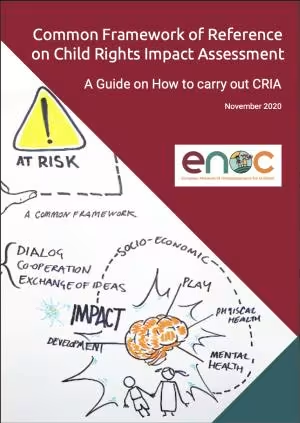
Common Framework of Reference on Child Rights Impact Assessment: A Guide on How to carry out CRIA (ENOC 2020)
Setting
Year
2020
Area
3.2
Description

Practical guidance document designed to support governments and institutions in systematically assessing how proposed laws, policies, programmes, and services may affect the rights and well-being of children and young people. It outlines a structured, evidence-based process for analysing potential and actual impacts, grounded in the United Nations Convention on the Rights of the Child, and emphasises the importance of using both quantitative and qualitative data, including the views and experiences of children themselves

Brief description
Assessment tool for identifying how proposed laws, policies or programmes may affect children’s rights.
Country
INTERNATIONAL
Keywords
child rights, impact assessment, UNCRC, evidence-based process, unintended harm
Resource Title
Common Framework of Reference on Child Rights Impact Assessment: A Guide on How to carry out CRIA (ENOC 2020)
Source
WHO
Topic
adolescent mental health and well-being
Tools & Frameworks
Report
Language
EN
Relevant actions
Action 1
Use it to…
monitor population-level trends and social determinants.
Where to look in this resource
The whole report is relevant — it provides population-level mental health indicators and the breakdowns by age, gender and socioeconomic background to monitor trends over time.
Image
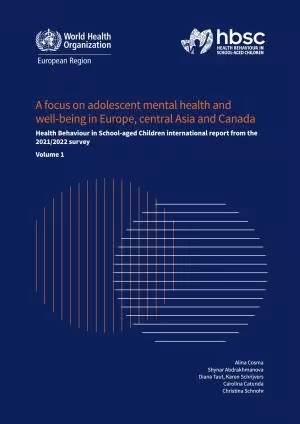
A focus on adolescent mental health and well- being in Europe, central Asia and Canada. Health Behaviour in School-aged Children international report from the 2021/2022 survey (WHO EURO 2023)

Setting
Year
2023
Area
3.2
Description

This report presents cross-national data on adolescent health and well-being, highlighting trends in mental health, life satisfaction, and social environments across Europe, Central Asia, and Canada. It emphasises growing concerns around psychological distress and inequalities, providing a strong evidence base to inform policies and interventions that support young people’s mental health.

Brief description
Cross-national report on adolescent mental health, wellbeing and inequalities across Europe, Central Asia and Canada.
Country
EUROPE
Keywords
inequalities, life satisfaction, psychological distress, HBSC
Resource Title
A focus on adolescent mental health and well- being in Europe, central Asia and Canada. Health Behaviour in School-aged Children international report from the 2021/2022 survey (WHO EURO 2023)
Source
WHO
Topic
adolescent mental health and well-being
Tools & Frameworks
Report
Language
EN
Relevant actions
Action 1 (Action 2 limited)
Use it to…
benchmark national trends against regional patterns and identify the age, gender and socioeconomic inequalities that need targeted policy attention.
Where to look in this resource
Read the report as a whole for Action 1 — it is focused entirely on adolescent mental health (the status of each indicator, and the age, gender and socioeconomic breakdowns). It is relevant to Action 2 only through the “Social inequalities” theme; family, school and digital determinants sit across other HBSC volumes.
Image
A focus on adolescent mental health and well- being in Europe, central Asia and Canada. Health Behaviour in School-aged Children international report from the 2021/2022 survey (WHO EURO 2023)
Setting
Year
2021
Area
1.1
Description

This report presents cross-national data on adolescent health and well-being, highlighting trends in mental health, life satisfaction, and social environments across Europe, Central Asia, and Canada. It emphasises growing concerns around psychological distress and inequalities, providing a strong evidence base to inform policies and interventions that support young people’s mental health.

Brief description
Cross-national report on adolescent mental health, wellbeing and inequalities across Europe, Central Asia and Canada.
Country
EUROPE
Keywords
inequalities, life satisfaction, psychological distress, HBSC
Resource Title
A focus on adolescent mental health and well- being in Europe, central Asia and Canada. Health Behaviour in School-aged Children international report from the 2021/2022 survey (WHO EURO 2023)
Source
WHO
Topic
Mental healh
Tools & Frameworks
Database
Language
EN
Relevant actions
Action 3
Use it to…
assess system capacity, service coverage, workforce and financing gaps against international benchmarks.
Where to look in this resource
The “Governance of mental health systems”, “Mental health financing and workforce” and “Mental health services” sections (including service coverage) - plus your country profile on the website
Image
Mental Health Atlas 2024 (WHO 2025)
Age group
Setting
Year
2024
Area
1.1
Description

Compiles global data on mental health systems, including policies, services, workforce, and financing. It enables countries to track progress, identify gaps in care, and benchmark against international targets, supporting efforts to strengthen mental health systems and improve access to services. Country level data is presented in the country profiles available on the website.

Brief description
Global WHO database tracking countries’ mental health policies, services, workforce and financing.
Country
INTERNATIONAL
Keywords
Mental Health Atlas, country profiles, workforce, financing, benchmarking
Resource Title
Mental Health Atlas 2024 (WHO 2025)
Source
WHO
Topic
monitoring adolescent health
Tools & Frameworks
Guidelines
Language
EN
Relevant actions
Actions 1 & 2
Use it to…
select indicators and strengthen monitoring and accountability over time.
Where to look in this resource
RELEVANT FOR ACTION 1
The “Subjective well-being” and “Health outcomes and conditions” indicators — for measuring and tracking mental health status
RELEVANT FOR ACTION 2
The “Social, cultural, economic, educational and environmental determinants” and “Health behaviours and risks” indicators.
Image
The adolescent health indicators recommended by the Global Action for Measurement of Adolescent health (WHO) -GAMA
Setting
Area
1.1
Description

An international initiative launched in 2018 to improve the consistency and quality of data on adolescent health and well-being worldwide, addressing longstanding gaps in how the needs of young people aged 10–19 are understood and monitored. Developed in collaboration with key UN partners, it establishes a standardized framework of indicators across multiple domains, including health outcomes, behaviours, and social determinants. Its relevance to child and adolescent mental health lies in its holistic approach, which embeds mental health within broader measures of well-being rather than treating it in isolation. By incorporating indicators related to emotional well-being, risk exposure, and environmental influences, GAMA enables more reliable tracking of mental health needs and highlights the complex factors shaping outcomes during adolescence—a critical developmental period when many mental health conditions first emerge. This integrated, data-driven approach supports more effective policy, prevention, and service planning, ultimately strengthening global efforts to promote mental health and well-being among children and adolescents

Brief description
WHO guidance presenting a recommended set of indicators for monitoring adolescent health.
Country
INTERNATIONAL
Keywords
AMA, indicator framework, UN collaboration, well-being determinants, data standardisation
Resource Title
The adolescent health indicators recommended by the Global Action for Measurement of Adolescent health (WHO) -GAMA
Source
UNICEF
Topic
Evidence on mental health
Tools & Frameworks
Policy Brief
Language
EN
Relevant actions
Actions 1 & 2
Use it to…
give decision-makers a concise overview of the scale, drivers and consequences of the challenge.
Where to look in this resource
A short, focused brief — read it in full. It gives the scale, prevalence and who is affected (Action 1), and the major risk and protective factors and social, economic and environmental determinants (Action 2).
Image
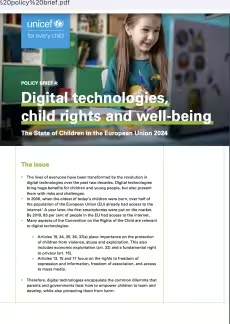
Policy Brief. Child and Adolescent Mental Health: The State of Children in the European Union (UNICEF 2024)
Setting
Year
2024
Area
1.1
Description

Synthesises key data on the mental health of children and adolescents across the European Union, providing a clear overview of prevalence, trends, and major risk and protective factors. It brings together evidence on issues such as anxiety, depression, and the impacts of social, economic, and environmental determinants, helping to highlight the scale and nature of mental health challenges facing young people in the EU context.

Brief description
UNICEF policy brief summarising key evidence on child and adolescent mental health, risks and protective factors.
Country
EUROPE
Keywords
anxiety, depression, risk & protective factors, prevalence trends, EU
Resource Title
Policy Brief. Child and Adolescent Mental Health: The State of Children in the European Union (UNICEF 2024)