Toolkit guide
Source
WHO
Topic
stigma
Tools & Frameworks
Toolkit
Language
EN
Relevant actions
Layer 1
Use it to…
Support the design of scalable, system-level strategies to reduce stigma and discrimination, a key barrier to access, equity, and effectiveness in mental health systems.
Where to look in this resource
The whole document is relevant, as it sets out a four-step, evidence-based process — built on lived-experience leadership, social contact, and inclusive collaboration — for planning, delivering, and evaluating anti-stigma initiatives across health, workplace, school, and community settings.
Image
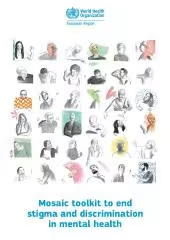
Mosaic toolkit to end stigma and discrimination in mental health
Age group
Setting
Area
2.2
Description

A structured and evidence-informed approach to reducing stigma and discrimination associated with mental health conditions. It is grounded in three core principles—leadership by people with lived experience, social contact, and inclusive collaboration—and translates these into a practical four-step process for designing, implementing, and scaling anti-stigma interventions. The toolkit combines conceptual guidance with actionable steps and real-world case studies, enabling adaptation across different policy, service, and community contexts. It also highlights the systemic nature of stigma, including its impact on access to care, social inclusion, and life opportunities, and emphasises the role of coordinated, multisectoral action in addressing these challenge
Brief description
Provides practical, evidence-based guidance for designing and implementing interventions to reduce stigma and discrimination in mental health.
Country
INTERNATIONAL
Keywords
stigma, discrimination, lived experience leadership, social contact, four-step process
Resource Title
Mosaic toolkit to end stigma and discrimination in mental health
Topic
Digital determinants
Tools & Frameworks
Policy Brief
Language
EN
Relevant actions
Actions 2 & 4
Use it to…
understand the digital determinants of mental health and the inequalities and rights issues they raise.
Where to look in this resource
A short, focused brief — read it in full. It covers digital risks and benefits and their mental-health implications (Action 2), and digital inequalities and the child-rights dimension — who is most exposed and least protected (Action 4).
Image
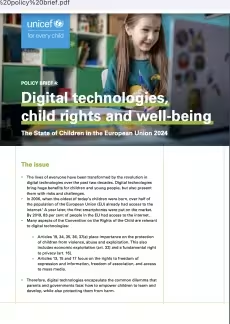
Digital technologies, child rights and well-being: The State of Children in the European Union 2024
Year
2024
Area
1.1
Description

Synthesises evidence across the European Union on how children engage with digital technologies, including patterns of access, use, benefits, and risks. It examines key issues such as digital inequalities, online safety, and the impact of digital environments on children’s development and well-being, including mental health. The brief highlights how social, economic, and structural factors shape children’s digital experiences and identifies key areas where policy action is needed to ensure that digital technologies support, rather than undermine, children’s rights and well-being.

Brief description
EU-focused synthesis of evidence on children’s access to, use of, and experiences with digital technologies, highlighting implications for mental health, well-being, and inequalities.
Country
EUROPE
Keywords
digital rights, online safety, digital inequalities, EU policy, child development
Resource Title
Digital technologies, child rights and well-being: The State of Children in the European Union 2024
Source
OECD
Topic
Guaranteeing access to early intervention and mental health services and support
Tools & Frameworks
Report
Language
EN
Relevant actions
Layers 1, 2 & 3
Use it to…
bring together cost-effective public health approaches and the policy levers needed to support them.
Where to look in this resource
The “Assessment and recommendations” chapter sets out the cross-cutting findings, cost-effectiveness and policy levers. The best-practice chapters most relevant to children, adolescents and young people are Zippy’s Friends (school-based social-emotional learning), Icehearts (long-term mentoring for children at higher risk), @ease (youth walk-in / low-threshold early support), “This is me” (youth mental health), Next Stop: Mum (perinatal depression screening) and SUPRA (suicide prevention, Austria).
Image
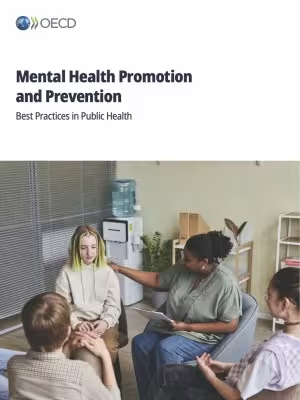
Mental Health Promotion and Prevention: Best Practices in Public Health (OECD 2025)
Age group
Setting
Year
2025
Area
2.2
Description

Synthesises international evidence on effective public health approaches to mental health promotion and prevention. The report highlights cost-effective interventions, policy levers, and implementation strategies, supporting governments in scaling up initiatives that improve population mental health and reduce long-term system burdens.

Brief description
OECD report on cost-effective public health approaches to mental health promotion and prevention.
Country
EUROPE
Keywords
cost-effectiveness, policy levers, scale-up, public health, mental health, promotion and prevention
Resource Title
Mental Health Promotion and Prevention: Best Practices in Public Health (OECD 2025)
Source
European Commission
Tools & Frameworks
Frameworl
Language
EN
Relevant actions
Layers 1 & 2
Use it to…
translate mental health priorities into coherent, scalable education policies, aligning school-level action with national prevention, inclusion and wellbeing strategies.
Where to look in this resource
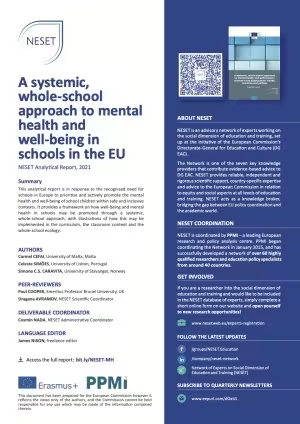
The whole one-pager is relevant — it summarises the whole-school framework across leadership, curriculum, staff wellbeing, student participation, family engagement and links to external services.
Image
Whole‑school mental health framework (NESET)
Area
2.2
Description

Developed by NESET, the framework emphasizes that mental health and wellbeing are shaped by the entire school environment, including leadership, curriculum, staff wellbeing, student participation, family engagement, and links with external services. It promotes prevention, early identification, and inclusive practices rather than isolated interventions. Mental health is treated as a shared responsibility across the whole education system.

Brief description
The NESET whole‑school mental health framework provides a structured approach for schools to promote wellbeing, prevent mental health difficulties, and support learners through coordinated, system‑wide action.
Country
EUROPE
Keywords
whole-school approach, leadership, curriculum, family engagement, prevention & early identification
Resource Title
Whole‑school mental health framework (NESET)
Topic
Promising practice — cross-sectoral integration (health, social care, education) within one service point.
Tools & Frameworks
Good practice
Language
EN
Use it to…
Use it to help identify, adapt, and apply effective solutions for integrated 'one-stop' early years family support hubs.
Where to look in this resource
The whole document is relevant - it summarises the main characteristics of the practice.
Image
Family Centres
Area
2.2
Description

Following a Swedish model, Family Centres bring maternity and child health care, social-welfare services and early-education facilities together within a single, community-based service point for parents and young children. They are implemented across the Nordic countries (Sweden, Norway, Finland, Iceland, Denmark) and provide integrated, easily accessible support during the early years.

Brief description
Community-based hubs integrating health, social care and education for parents and young children.
Country
Denmark, Finland, Iceland, Norway, Sweden 
Keywords
Nordic model, integrated services, one-stop hub, early years, cross-sectoral, Promotion, Universal prevention
Resource Title
Family Centres
Topic
Promising practice - supportive policy framework, institutional ownership, multiprofessional delivery, gender-responsive (engages mothers), family-feedback loops.
Tools & Frameworks
Good practice
Language
EN
Use it to…
Use it to help identify, adapt, and apply effective solutions for strong caregiving environments for vulnerable families.
Where to look in this resource
The whole document is relevant - it summarises the main characteristics of the practice.
Image
30_fruhe hilfen
Area
2.2
Description

Frühe Hilfen ('Early Help') provides structured support to families from the prenatal period through early childhood (0–3), with particular attention to vulnerable and disadvantaged groups. It is delivered mainly through home visits by multiprofessional teams (social workers, nurses, midwives, psychologists, teachers) and coordinated by the federal health ministry with provincial health and child-welfare departments.

Brief description
Austria's national early-childhood family support service, focused on vulnerable families.
Country
Austria, Italy, Liechtenstein 
Keywords
Family-based , Universal prevention, Targeted prevention promotion
Resource Title
FrĂĽhe Hilfen
Topic
Promising practice - robust evidence base, strong monitoring/evaluation system, transferable with implementation support.
Tools & Frameworks
Good practice
Language
EN
Use it to…
Use it to help identify, adapt, and apply effective solutions for evidence-based, transferable parenting and family-skills programmes.
Where to look in this resource
The whole document is relevant - it summarises the main characteristics of the practice.
Image
31_SFP
Area
2.2
Description

A structured, time-limited, group-based programme that builds parenting competencies and family functioning through structured sessions, supporting children's social, emotional and academic development. It is implemented across eight European countries and typically endorsed by national ministries of health, education and social affairs.

Brief description
Group-based parenting/family-skills programme that strengthens parenting competencies.
Country
France, Ireland, Austria, Italy, Portugal, Denmark, Sweden, Slovenia 
Keywords
Family-based , Universal prevention, Targeted prevention promotion, parenting competencies, group-based, multi-country, evaluation system, family functioning
Pdf file
31_SFP.pdf (306.66 KB)
Resource Title
Strengthening Families Program (SFP)
Topic
Promising practice - workforce training/task-sharing, early identification, links maternal and child mental health.
Tools & Frameworks
Good practice
Language
EN
Use it to…
Use it to help identify, adapt, and apply effective solutions for postpartum depression screening within routine maternal care.
Where to look in this resource
The whole document is relevant - it summarises the main characteristics of the practice.
Image
32_next sttop
Area
2.2
Description

A postpartum depression screening programme that trains healthcare professionals — including midwives and nurses — to identify and support women experiencing postpartum depression, recognising the link between maternal mental health and early child development.

Brief description
Postpartum depression screening programme in Poland.
Country
Poland 
Keywords
Family-based · Targeted prevention, Subclinical care, postpartum depression, screening, workforce training, maternal mental health, Poland
Resource Title
Next stop: Mum
Topic
Promising practice - equity focus, national funding/ownership, quality assurance, scales evidence-based programmes.
Tools & Frameworks
Good practice
Language
EN
Use it to…
Use it to help identify, adapt, and apply effective solutions for equitable scale-up of evidence-based parenting programmes.
Where to look in this resource
The whole document is relevant - it summarises the main characteristics of the practice.
Image
33_nesLogo
Area
2.2
Description

Led by NHS Education for Scotland, PoPP expands access to evidence-based parenting programmes (Incredible Years and Triple P) for families with identified needs, providing training, implementation support and ongoing quality assurance while working with Community Planning Partnerships across Scotland.

Brief description
Scotland's project expanding access to evidence-based parenting programmes for families in need.
Country
Scotland (UK) 
Keywords
Incredible Years, Triple P, equity, Scotland, national scale-up, Family-based · Targeted prevention, Subclinical care, Families with identified needs
Resource Title
Psychology of Parenting Project (PoPP)
Topic
Promising practice - strong international evidence base, workforce-delivered home visiting, targets disadvantaged families.
Tools & Frameworks
Good practice
Language
EN
Use it to…
Use it to help identify, adapt, and apply effective solutions for home-visiting support targeting early adversity in at-risk mothers.
Where to look in this resource
The whole document is relevant - it summarises the main characteristics of the practice.
Image
34_NurseFamily
Area
2.2
Description

An evidence-based home-visiting programme in which trained nurses regularly visit first-time, socially disadvantaged mothers from pregnancy through the child's early years, supporting maternal health, sensitive caregiving and child development. It is implemented in several European countries (Bulgaria, Germany, Netherlands, Norway, UK).

Brief description
Home-visiting programme pairing nurses with first-time, at-risk mothers.
Country
Bulgaria, Germany, Netherlands, Norway, UK 
Keywords
Family-based · Universal prevention, nurse home visiting, disadvantaged mothers, early adversity, multi-country, evidence-based
Resource Title
Nurse-Family Partnership