Toolkit guide
Source
WHO
Topic
CAH
Tools & Frameworks
Strategy
Language
EN
Relevant actions
Scope: WHO European Region
Use it to…
Connect child and adolescent mental health to broader regional health and wellbeing priorities.
Where to look in this resource
The whole strategy is relevant — it sets out the vision, priorities and strategic directions, including the mental health elements within its life-course, determinants-based approach.
Image
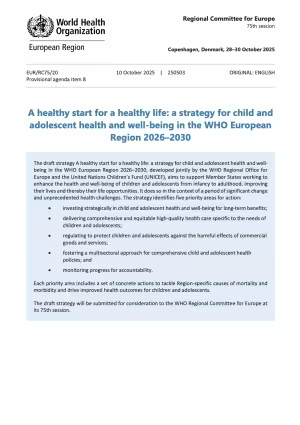
A healthy start for a healthy life: a strategy for child and adolescent health and well-being in the WHO European Region 2026–2030
Setting
Year
2020
Area
1.2
Description

Outlines a regional vision and priorities for improving the health and well-being of children and adolescents across the WHO European Region. It takes a life-course and systems-based approach, addressing key determinants of health—including mental health—and providing strategic directions to support countries in strengthening policies, services, and preventive actions.

Brief description
WHO regional strategy for improving child and adolescent health and wellbeing through a life-course approach.
Country
EUROPE
Keywords
life-course approach, regional strategy, determinants of health, systems-based, 2026-2030
Resource Title
A healthy start for a healthy life: a strategy for child and adolescent health and well-being in the WHO European Region 2026–2030
Source
WHO
Topic
Guaranteeing access to early intervention and mental health services and support
Tools & Frameworks
Guidelines
Language
EN
Relevant actions
Layers 2 & 3
Use it to…
Clarify how prevention and promotion link to early intervention and effective service organisation.
Where to look in this resource
The “Designing and delivering services” chapter (principles for service delivery; integration in general health services; community mental health services; services beyond the health sector; and digital interventions) and the “Strengthening systems” chapter (standards, governance, family and youth participation, financing, workforce and information systems) are the practical core. Note: this is about organising and delivering mental health care, which sits at targeted prevention and the care layers above.
Image
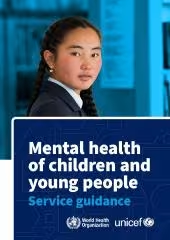
Mental health of children and young people: service guidance (WHO 2025)
Setting
Year
2025
Area
2.2
Description

Outlines key principles and standards for designing and delivering effective mental health services for children and young people. It focuses on service organisation, accessibility, quality of care, and integration across sectors, helping countries strengthen systems to better meet the needs of young populations.

Brief description
Guidance on organising accessible, high-quality mental health services for children and young people.
Country
INTERNATIONAL
Keywords
service organisation, accessibility, quality of care, integration, standards
Resource Title
Mental health of children and young people: service guidance (WHO 2025)

Source
European Commission
Topic
Creating an enabling learning environment
Tools & Frameworks
Guidelines
Language
EN
Relevant actions
Layers 1 & 2
Use it to…
translate policy commitments into practical school-level action on wellbeing and mental health.
Where to look in this resource
The eleven key recommendations (with specific messages for policymakers and for schools) are the practical core, sitting within the whole-school conceptual framework set out earlier in the document.
Image
Wellbeing and mental health at school: Guidelines for policymakers, schools and educators  (EU 2025)
Year
2025
Area
2.2
Description

Practical recommendations for promoting mental well-being within school settings. They support policymakers and educators in creating supportive learning environments, integrating mental health into school policies, and implementing preventive and early intervention strategies.

Brief description
Practical school-focused guidance for promoting wellbeing and mental health through policy and practice.
Country
EUROPE
Keywords
school policy, early intervention, learning environment, educators, wellbeing
Resource Title
Wellbeing and mental health at school: Guidelines for policymakers, schools and educators (EU 2025)
Source
WHO, UNICEF, UNESCO
Topic
Creating an enabling learning environment
Tools & Frameworks
Guidelines
Language
EN
Relevant actions
Layers 1 & 2
Use it to…
Translate evidence on child and adolescent mental health into a clear, actionable systems framework that can be embedded within education policy..
Where to look in this resource
The whole brief is relevant — it sets out the whole-school (“health-promoting schools”) framework and practical actions across governance, partnerships and service provision, with country case studies.
Image
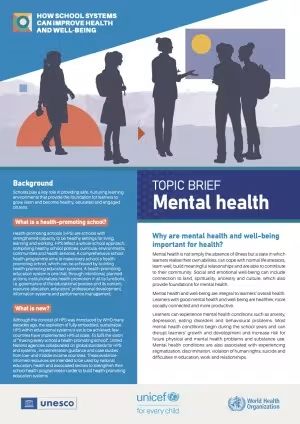
How school systems can imporve health and wellbeing: topic brief mental health (WHO, UNICEF and UNESCO 2023)
Year
2024
Area
2.2
Description

Overview of the importance of mental health and well-being in schools and presents a systems-based approach to strengthening support through “health-promoting schools.” It explains how mental health influences learning, development, and long-term outcomes, noting that many mental health conditions emerge during school years and can affect educational attainment and life trajectories . The document outlines the role of schools as key environments for prevention, early identification, and access to support, and introduces a whole-school framework that integrates policies, curriculum, environments, and services. It also provides practical examples of actions across multiple domains—such as governance, community partnerships, and service provision—to improve mental health outcomes, alongside case studies demonstrating implementation in different country contexts.

Brief description
Outlines how school systems can promote and protect the mental health and well-being of children and adolescents through a health-promoting schools approach.
Country
INTERNATIONAL
Keywords
health-promoting schools, whole-school approach, governance, case studies, education policy
Resource Title
How school systems can imporve health and wellbeing: topic brief mental health (WHO, UNICEF and UNESCO 2023)
Source
WHO
Topic
well care visits
Tools & Frameworks
Guidelines
Language
EN
Use it to…
Encourage routine contact points for promotion, prevention and early identification across childhood and adolescence.
Where to look in this resource
The whole document is relevant, as it sets out a schedule of routine contact points — from birth through adolescence — each mapped to specific promotion, prevention, and early-identification actions.
Setting
Year
2024
Area
2.2
Brief description
Guidance on planning routine well-care visits to support child and adolescent health and wellbeing.
Country
INTERNATIONAL
Keywords
well-care visits, routine contact points, early identification, service managers, prevention
Source
WHO
Topic
well care visits
Tools & Frameworks
Guidelines
Language
EN
Relevant actions
Layer 2
Use it to…
Encourage routine contact points for promotion, prevention and early identification across childhood and adolescence.
Where to look in this resource
The whole document is relevant, as it sets out a schedule of routine contact points — from birth through adolescence — each mapped to specific promotion, prevention, and early-identification actions.
Image
Improving the health and wellbeing of children and adolescents: guidance on scheduled child and adolescent well-care visits (WHO 2024)
Setting
Year
2024
Area
2.2
Description

This guidance is primarily aimed at policy makers and managers responsible for designing and managing health and wellbeing services for children and adolescents, and health and non-health care providers.

Brief description
Guidance on planning routine well-care visits to support child and adolescent health and wellbeing.
Country
INTERNATIONAL
Keywords
well-care visits, routine contact points, early identification, service managers, prevention
Resource Title
Improving the health and wellbeing of children and adolescents: guidance on scheduled child and adolescent well-care visits (WHO 2024)
Source
WHO
Topic
Enhancing caregiver child relationships to support healthy development
Tools & Frameworks
Guidelines
Language
EN
Relevant actions
Action 3
Use it to…
strengthen parenting support through existing service platforms.
Where to look in this resource
The recommendations are the practical core (with the executive summary giving the headline recommendations); for implementation, these are the basis for delivering parenting support through existing health, social and community platforms (Action 3).
Image
WHO guidelines on parenting interventions to prevent maltreatment and enhance parent–child relationships with children aged 0–17 years (WHO 2023)
Age group
Year
2023
Area
3.1
Description

Evidence-based recommendations on parenting interventions for parents and caregivers of children aged 0–17 years that are designed to reduce child maltreatment and harsh parenting, enhance the parent–child relationship, and prevent poor mental health among parents and emotional and behavioural problems among children

Brief description
WHO recommendations on parenting interventions that strengthen caregiving and reduce risks to children’s wellbeing.
Country
INTERNATIONAL
Keywords
parenting interventions, child maltreatment prevention, parent-child relationship, evidence-based, caregivers
Resource Title
WHO guidelines on parenting interventions to prevent maltreatment and enhance parent–child relationships with children aged 0–17 years (WHO 2023)
Source
WHO
Topic
Enhancing caregiver child relationships to support healthy development
Tools & Frameworks
Guidelines
Language
EN
Relevant actions
Layer 1
Use it to…
Strengthen the case for family-based prevention strategies that support child development and mental wellbeing.
Where to look in this resource
The recommendations are the practical core (with the executive summary giving the headline recommendations); the remainder sets out the evidence base and the guideline development process.
Image
WHO guidelines on parenting interventions to prevent maltreatment and enhance parent–child relationships with children aged 0–17 years (WHO 2023)
Age group
Year
2023
Area
2.2
Description

Evidence-based recommendations on parenting interventions for parents and caregivers of children aged 0–17 years that are designed to reduce child maltreatment and harsh parenting, enhance the parent–child relationship, and prevent poor mental health among parents and emotional and behavioural problems among children

Brief description
WHO recommendations on parenting interventions that strengthen caregiving and reduce risks to children’s wellbeing.
Country
INTERNATIONAL
Keywords
parenting interventions, child maltreatment prevention, parent-child relationship, evidence-based, caregivers
Resource Title
WHO guidelines on parenting interventions to prevent maltreatment and enhance parent–child relationships with children aged 0–17 years (WHO 2023)
Topic
Digital determinants
Tools & Frameworks
Policy Brief
Language
EN
Relevant actions
Actions 2 & 4
Use it to…
understand the digital determinants of mental health and the inequalities and rights issues they raise.
Where to look in this resource
A short, focused brief — read it in full. It covers digital risks and benefits and their mental-health implications (Action 2), and digital inequalities and the child-rights dimension — who is most exposed and least protected (Action 4).
Image
Digital technologies, child rights and well-being: The State of Children in the European Union 2024
Age group
Year
2024
Area
1.1
Description

Synthesises evidence across the European Union on how children engage with digital technologies, including patterns of access, use, benefits, and risks. It examines key issues such as digital inequalities, online safety, and the impact of digital environments on children’s development and well-being, including mental health. The brief highlights how social, economic, and structural factors shape children’s digital experiences and identifies key areas where policy action is needed to ensure that digital technologies support, rather than undermine, children’s rights and well-being.

Brief description
EU-focused synthesis of evidence on children’s access to, use of, and experiences with digital technologies, highlighting implications for mental health, well-being, and inequalities.
Country
EUROPE
Keywords
digital rights, online safety, digital inequalities, EU policy, child development
Resource Title
Digital technologies, child rights and well-being: The State of Children in the European Union 2024
Source
European Commission
Tools & Frameworks
Frameworl
Language
EN
Relevant actions
Layers 1 & 2
Use it to…
translate mental health priorities into coherent, scalable education policies, aligning school-level action with national prevention, inclusion and wellbeing strategies.
Where to look in this resource
The whole one-pager is relevant — it summarises the whole-school framework across leadership, curriculum, staff wellbeing, student participation, family engagement and links to external services.
Image
Whole‑school mental health framework (NESET)
Area
2.2
Description

Developed by NESET, the framework emphasizes that mental health and wellbeing are shaped by the entire school environment, including leadership, curriculum, staff wellbeing, student participation, family engagement, and links with external services. It promotes prevention, early identification, and inclusive practices rather than isolated interventions. Mental health is treated as a shared responsibility across the whole education system.

Brief description
The NESET whole‑school mental health framework provides a structured approach for schools to promote wellbeing, prevent mental health difficulties, and support learners through coordinated, system‑wide action.
Country
EUROPE
Keywords
whole-school approach, leadership, curriculum, family engagement, prevention & early identification
Resource Title
Whole‑school mental health framework (NESET)